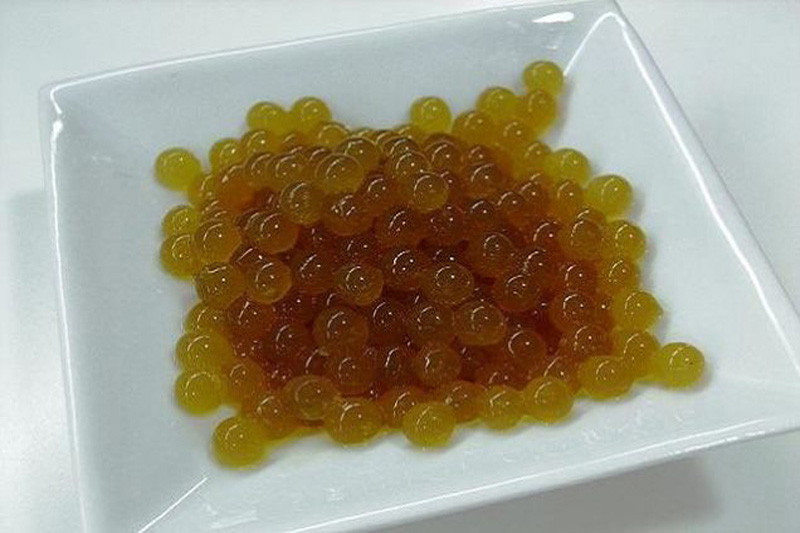
Calcium alginate is produced by the reaction of sodium alginate with calcium salts, forming an insoluble gel matrix. It is derived from brown seaweed and is valued for its unique ability to form heat-stable gels through ionic cross-linking rather than thermal processes.
Calcium alginate gels are widely used in the food industry for restructuring, encapsulation, and controlled release applications. The ingredient is particularly important in molecular gastronomy techniques such as spherification and in the production of restructured foods. Calcium alginate is also used as a dietary fiber source and as a wound dressing material in medical applications.